‘Reflections’ are diverse ‘op-eds’ in which artists, researchers, peer-reviewers, editors and readers express their view on what is going on in the field of artistic research. Reflections are not peer reviewed; restrictions in terms of language, length, topic or theme do not apply.

For more information about submitting your own ‘reflection’ please continue reading here.
 

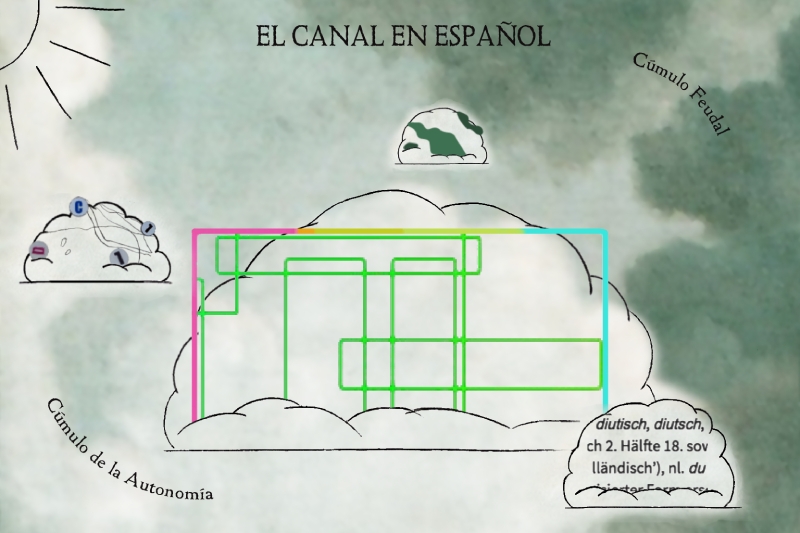
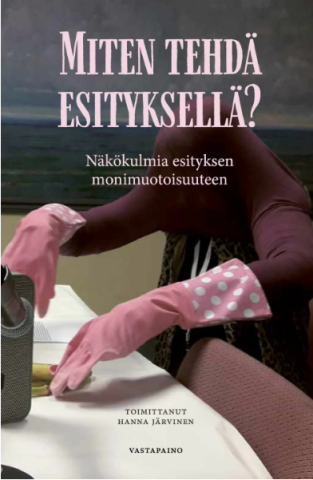
Some Opinions about Publishing in Small Languages

Hanna Järvinen

Without sustained academic thinking about how a language renews its speakers’ relationship with the world, any language gradually loses its relevance in decision-making and public life. Increasingly, younger scholars outside the former European empires and their now independent settler-colonies in neo-Europe have to choose between nuanced expression in their native languages or an ‘international’ career in simpler English.

[...]

4 PREGUNTAS “Nos alejamos de la idea de control, museificación y aislamiento de un supuesto objeto de estudio. Con el viento eso es imposible.”

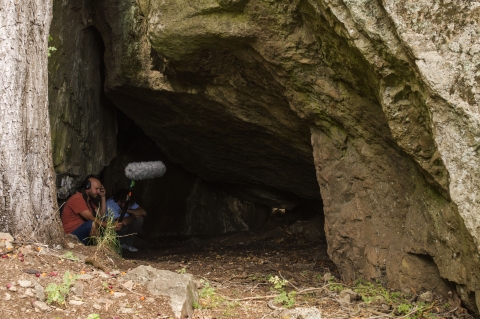
Entrevista a Archivo de lo Audible (Iván Rivelli, Gabriela Hernández, Álvaro Martín)

Con Archivo lo Audible, Iván Rivelli, Gabriela Hernández y Álvaro Martín se adentran en un proyecto de procesos de larga duración y largos ciclos. A través de grabaciones de campo, indagan en el rol del viento en la difusión de información sonora y en una idea de reterritorialización de “lo patagónico” que escapa a los preconceptos tradicionales fijados y que se apoya en lo procesual fluctuante del medio.

[...]
keywords:

4 PREGUNTAS: “La investigación artística abre el pensamiento hacia una pluralidad de mundos y modos de conocimiento”

Marcela Armas

Durante más de dos décadas, Marcela Armas ha indagado en las formas en que la energía y su uso indiscriminado sostienen la ética de un modelo social y las políticas que lo reproducen. Su obra, hecha de máquinas mecatrónicas, desarma la lógica capitalista de producción y consumo para desplegar artefactos que, en lugar de extraer, producen afectos y cuidan la vida. Su práctica rehúye la parálisis que el sistema totalizador pretende imponer y se afirma en una autonomía que no aísla, sino que habilita formas de coexistencia conscientes y regenerativas.

[...]
keywords:

Living knowledge in times of the chainsaw

Eduardo Molinari
Every body of knowledge has its origins in the bodies-territory and territories-body that give it life. The creation and construction of knowledge, which is sometimes slow and processual and sometimes vertiginous and urgent, results from the composition of bodies, experiences, and soils. The same soil gives rise to diverse interpretations, meanings, and symbolizations by different human and non-human groups. This diversity is of special interest as evidence of interculturality (not monoculture), and pluriversity (not universality). Of interest as well is the powerful feedback provoked by the notion of body-territory/territory-body from decolonizing, ecofeminist, spatial, and environmental justice perspectives.2 What ways of knowing and investigating the world are possible within processes of extermination, cruelty, and plundering of territories and living beings? What qualities are desirable for the artist-researcher's subjectivity in communities and lands that have been violated and sacrificed? How do we imagine their tools and methodologies?
[...]
keywords:

4 PREGUNTAS: “La investigación es una forma de estar en el mundo con atención radical”

Shima

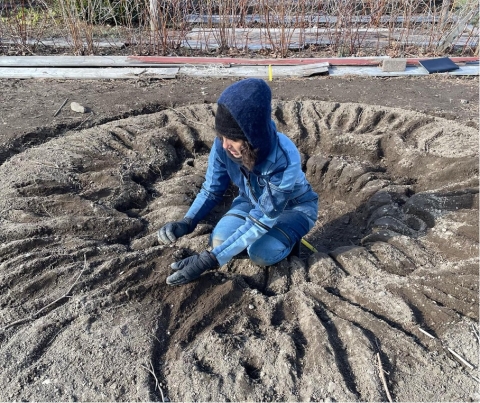
Shima es un artista cuya práctica se basa en la performance como eje principal de investigación y creación. Su trabajo se nutre de la acción, la vivencia y el proceso, desestructurando prácticas cotidianas para analizar críticamente los esquemas tradicionales del hacer. Se define como un cazador de contradicciones, encontrando en el error y la falla un motor para repensar, reformular y ampliar sus objetos de estudio.

[...]
keywords:

Journal for Artistic Research (JAR): Draft Proposal (12/11/2009)

Michael Schwab

The Journal for Artistic Research (JAR): Draft Proposal was commissioned by Florian Dombois and funded by Y (Institute for Transdisciplinarity), Bern University of the Arts. It was finalised on 12/11/2009 and made available for download from the first JAR website paving the way for the founding of the Society for Artistic Research (SAR) as publisher of the journal. Without any stable download link, we decided to make this historical document available again.

[...]
keywords:

Comments on the II Latin American Congress of Artistic Practice as Research (Santiago de Chile, 2024)

Carolina Benavente Morales
The II Latin American Congress of Artistic Practice as Research showcased the progress of this field in Latin America. Based on Robin Nelson's Practice as Research (PaR) model, designed for integrating artists into academia, I identified four key areas of focus at the Congress: the epistemic, the critical, the ontic, and the communicational. These areas revealed how the Congress presentations diverged from and inverted the PaR model, reflecting an effort to integrate artist-researchers into broader culture. The presentations demonstrated how artistic research generates knowledge and insights that challenge academic closure and open possibilities for transacademic relationality.
[...]
keywords:

A constellated field

Eduardo Molinari
The present text is a special adaptation for the Journal for Artistic Research of the original version I wrote for the book 'Becas a la Investigación Artística / Proyecto Ballena', which was publicly presented at the Casa del Bicentenario, in Buenos Aires, Argentina, on 7 December 2023. The aim was to share the theoretical background and the artistic tools and methods that, from my point of view, configure and strengthen a situated artistic research. The publication also included a foreword by Valeria Roberta González (then Secretary of National Heritage) and the voices of all the Fellows. The version I share here, on the other hand, seeks to build bridges of living intercultural knowledge between artist and non-artist researchers, between artistic, cultural and social institutions and organisations, and between popular and community culture and the academic world.
[...]
keywords: