Animism: The Visual Complexity of the Physical World from Emergence to Decay
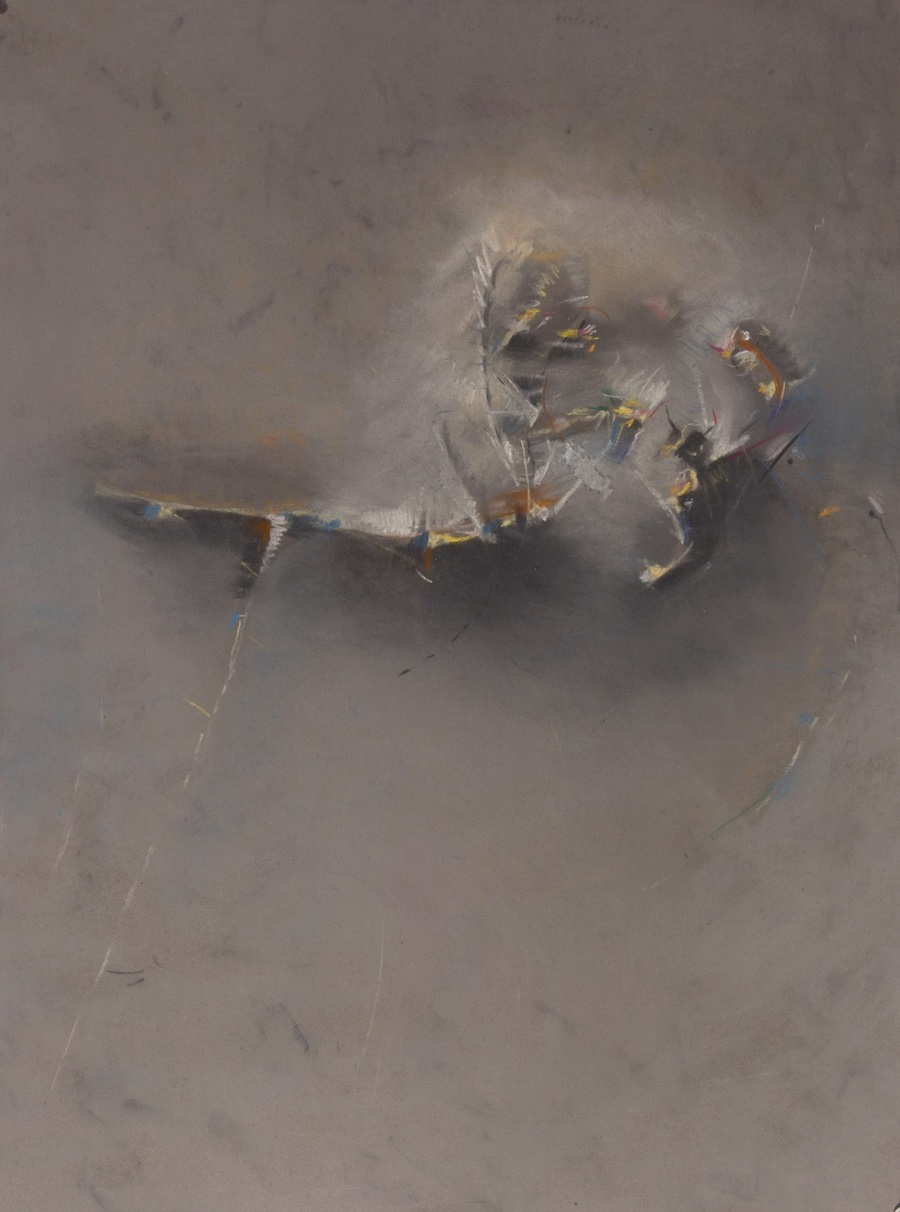
This exposition tracks the insights about fundamental principles of the animate world that came to me through my artistic practice beginning in the 1970s with studies of minute specimens of organic matter. Through drawing and painting images of these objects and then imitating the processes by which they came into being, I realized that animism operates at every scale of the physical world as part of larger systems of relations and forces through which the possibility of what may be becomes actualized as what is. The concept of animism refers to active systems in the physical world capable of producing transformation and being agents of change. These systems include the basic forces at work in atomic particles to the largest scale of cosmological activity. Animate things are not necessarily sentient or even alive. All life-forms are animate but not all animate forms are living things. A hurricane or a landslide, a magnetic field or electrical charge, a galaxy or sunspot, for instance, are all animate, part of the physical world and enact the stochastic unfolding of non-linear and non-mechanistic systems. While not alive in the biological sense, they are distinct from mechanistic dynamic forces that are predictable and linear, and they have agency in the manner addressed by theorists of “new materialism” such as Jane Bennett and others. The term graphic refers to marks made on a surface, an act of bringing something into being, not necessarily as a picture or representation. Though some of the images here are clearly pictorial, studies of pre-existing things, others are experiments in the production of marks within a graphical system or process that has its own animate quality.